



Neither the strongest nor the smartest survives in life. The one who can adapt to change the most is the one who survives.
Charlis Darwin
The Meta company’s applications have how many monthly users?
- Facebook: 3.03 billion
- Instagram: 2.35 billion
- Messenger: 1.3 billion
- WhatsApp: 2.7 billion
The data are monthly active user numbers for the year 2023.
So, 9.38 billion data flows live to Meta every month. Meta dominates everything from demographic information of these users to what they like, when they are happy, and when they are unhappy, even to their daily behaviors!
When it comes to Meta, they usually call it “The All-Seeing Eye.” Because it knows about every step we take.
Meta needs to control this data, and it does so with its own technologies and algorithms it writes. Of course, for simplicity, let’s just call it the algorithm for now.
Why does it do these? Because in 2023, Meta made $134.72 billion in advertising revenue. This figure was $121.9 billion in 2022.
Looking at this reason, it will be very understandable that organic engagement, which was 5.5% in 2019, is now around 0.25%.
As a result, Meta needs advertisers. It is estimated that it earns 99% of its revenue from advertisers. If advertisers cannot achieve the performance they want, they will not give. Facebook knows this best because this situation means a decrease in revenue.
So the most important job of this algorithm is to show the ad to the right person. It has been developed for this purpose since its establishment. Let’s take a look at how it has evolved without boring you.
Evolution of Facebook
2005: Facebook was founded.
2006: Newsfeed was created.
2007: The “Like” button was introduced.
2009: “Sorting order” Posts with the most likes began to rise to the top of the ranking.
2015: It began to lower the ranking of pages with high volume promotions. t introduced the “See First” feature, which allows a page’s post to appear instantly in your feed when it sends a post.
2016: It added the “Time Spend” ranking system. It began to measure based on the time a person spends with it, even if users do not interact with the post. It introduced the feature to start live broadcasts.
2017: “Emotional reactions” More than just Like.
For videos: Introduced the “Completion Rate” ratio. Videos that people watch until the end started to be shown to more people.
2018: Zuckerberg: “posts that spark conversations and meaningful interactions.”
He announced that he would prioritize posts that encourage conversation and interaction.
2019: It started to show the posts of your tagged friends you talk to in DMs as “Close Friends” by defining their posts to you more prominently.
2020: It announced that helping users understand the algorithm and control their own data would help provide better feedback to the algorithm. Concerns started to rise. Additionally, it announced that it would evaluate the reliability and quality of news.
2021: “Score system” Based on likes, saves, and comments, a system designed to discover new content.
You can check it out here: https://www.instagram.com/p/CRZsz1whj5e/
Now let’s move on to how the algorithm evolved in 2024.
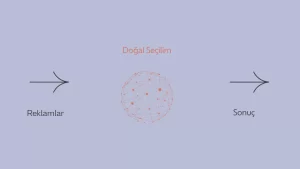
Diversity in Ads
In messages, images, and target audiences.
The algorithm combines and tests millions of times every day the data that all the scientists on Earth would analyze in a year through these 3 variables. This machine is already designed to test and analyze variables.
If we try to run a campaign with just 1 image, 1 text, and a small group of target audience, it will most likely be a failed campaign, and we will not spend the customer’s money correctly. As a result, we will not achieve the performance we want.
Also, this is not strategically sound; the algorithm gives a score to the ads that are weak as soon as they come out of the learning process, it codes them as unsuccessful from the beginning, and how can you win with just one image in the same race as millions of advertisers?
Customer Journey
You have diversity in texts, images, and target audiences, but you couldn’t position it like a journey. In other words, you couldn’t get them into a story. Still, this diversity won’t attract them. One of the misunderstood issues is this, what is the attractiveness that will take action for the target audience?
Maybe the Instagram account is very boring. Or the website/landing page is not persuasive enough. Maybe the CTA button on the website is not used in the right places.
Remember, the algorithm can determine what the target audience likes and dislikes! Let’s say, you took action on 70% of the audience who saw your ad, brought them to the website, but they took no action on the website, left after 5 seconds. Boom! Cost per click goes up. The result is bad end-of-month reports.
Facebook (Meta) Advertising Policies
If we do not comply with advertising policies, it doesn’t matter how good our journey, text, image, or diversity of target audience is. Because when you don’t comply with the policy, the ad display is stopped immediately, and if you repeat it, your ad account is banned. Then struggle.
Campaign Objective
Campaign objective affects the entire performance of the ad, but it should be decided at the beginning according to the target the brand wants to achieve at the end of the campaign. Each objective affects the way the algorithm works. I will explain these in detail in another article.
Performance Management
Finally, the algorithm expects you to manage your campaigns correctly. After the learning phase ends, the Meta algorithm determines the best-performing text, image, and target audience combination. This is a process of evolution, and the algorithm expects you to be involved in this process and manage it correctly.
One reason why some ads fail is that they either close the ads early or may have detected the problem too late. One of our jobs is to give the algorithm enough budget to do its job well. Convincing the customer is still part of our job.
Thanks to those who have read this far! It may be boring because it is one of my first articles. I will improve myself. Goodbye for now.